Most wardrobes have the same problem: too much black, grey and navy, and a drawer full of bright colours that never get worn. People buy colour with enthusiasm and then reach for black on the day, because colour feels risky. What if it clashes? What if it is too much? What if people stare? The result is a wardrobe that is safe, practical and quietly boring. The truth is that wearing colour is not a talent you are born with. It is a skill with a few simple rules, and once you learn them, colour becomes the easiest way to look interesting without spending any money at all.
The first rule is to start with one colour at a time. You do not need a rainbow outfit. You need one strong piece — a cobalt blue shirt, a red coat, an emerald green knit — worn with neutrals you already own. Navy trousers, white trainers, a grey coat: these are the quiet background that lets one colour shine. The outfit reads as intentional rather than accidental, because the eye has one place to land. Once you are comfortable with one colour, add a second — but keep the second one quieter, like a muted olive with a rust orange, or a soft pink with navy. Two loud colours competing for attention is what creates the traffic-light effect. One star and a supporting cast is what creates style.
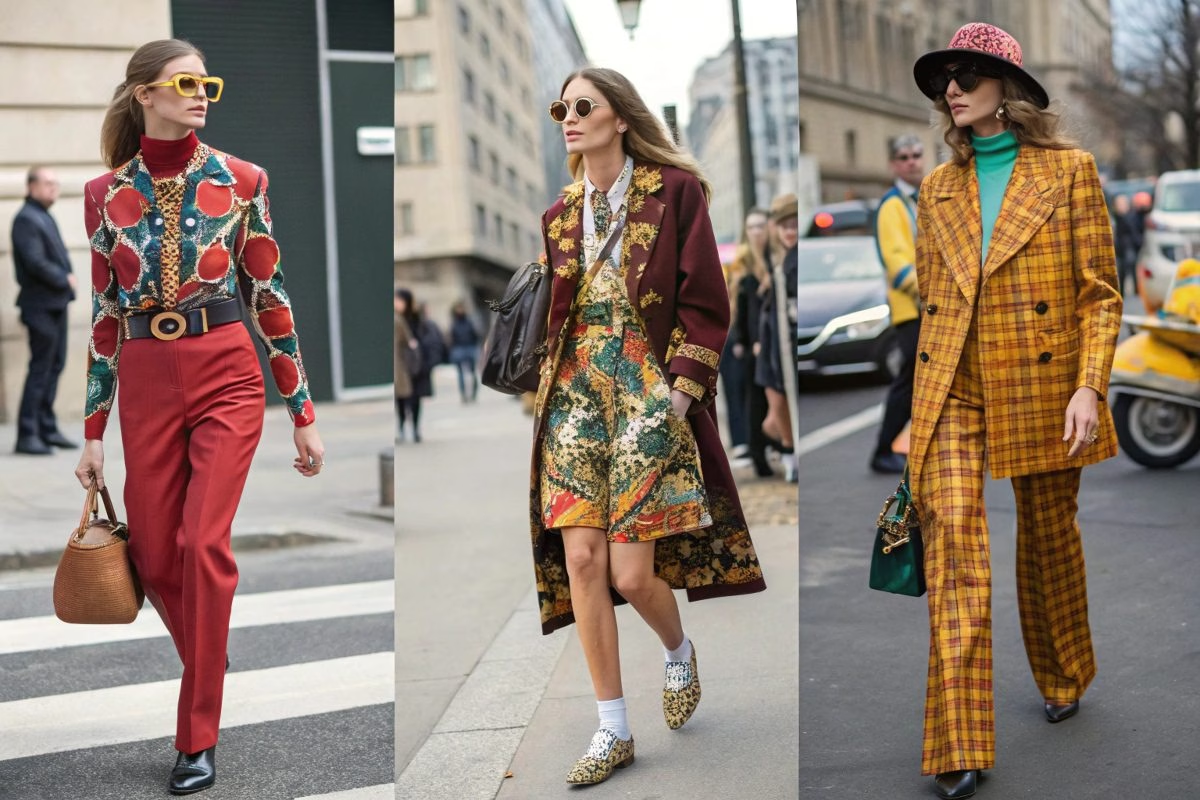
The second rule is to learn your own palette, not someone else’s. Some people glow in warm colours — terracotta, mustard, olive, warm red — while others look better in cool ones — navy, emerald, burgundy, icy blue. The test is simple: hold a fabric near your face in natural light and look at your skin. Does it look healthy and bright, or tired and grey? The right colour does the work for you, making you look rested even on a bad day. You do not need a professional colour analysis to start. You need a mirror, daylight and honesty about which of your existing clothes earn you compliments. The colours people praise you in are usually the colours that suit you.
The third rule is about proportion and placement. A bright colour near your face — a scarf, a shirt, a jacket — has the biggest impact, because it is the first thing people see. A bright colour on your lower half, like red trousers or yellow shoes, is bolder and harder to balance, so it works best when the rest of the outfit is calm. Accessories are the safest way to experiment: a colourful bag, a pair of socks, a watch strap. They let you test a colour without committing a whole outfit to it, and they are easy to swap if it does not work. Think of colour like seasoning: a little transforms the dish, too much ruins it, and the right amount depends on taste.
The last rule is the most important: wear the colour, do not let it wear you. Confidence is what separates a striking outfit from a costume, and confidence comes from comfort — with the colour, with the fit, and with the occasion. A bright suit at a creative workplace feels natural; the same suit at a funeral does not, and no colour rule can fix that. Start small, wear it often, and notice how people respond. Colour is not frivolous. It is communication: it says you are awake, you have energy, and you made a choice this morning. In a world dressed in black and grey, that choice is worth making.